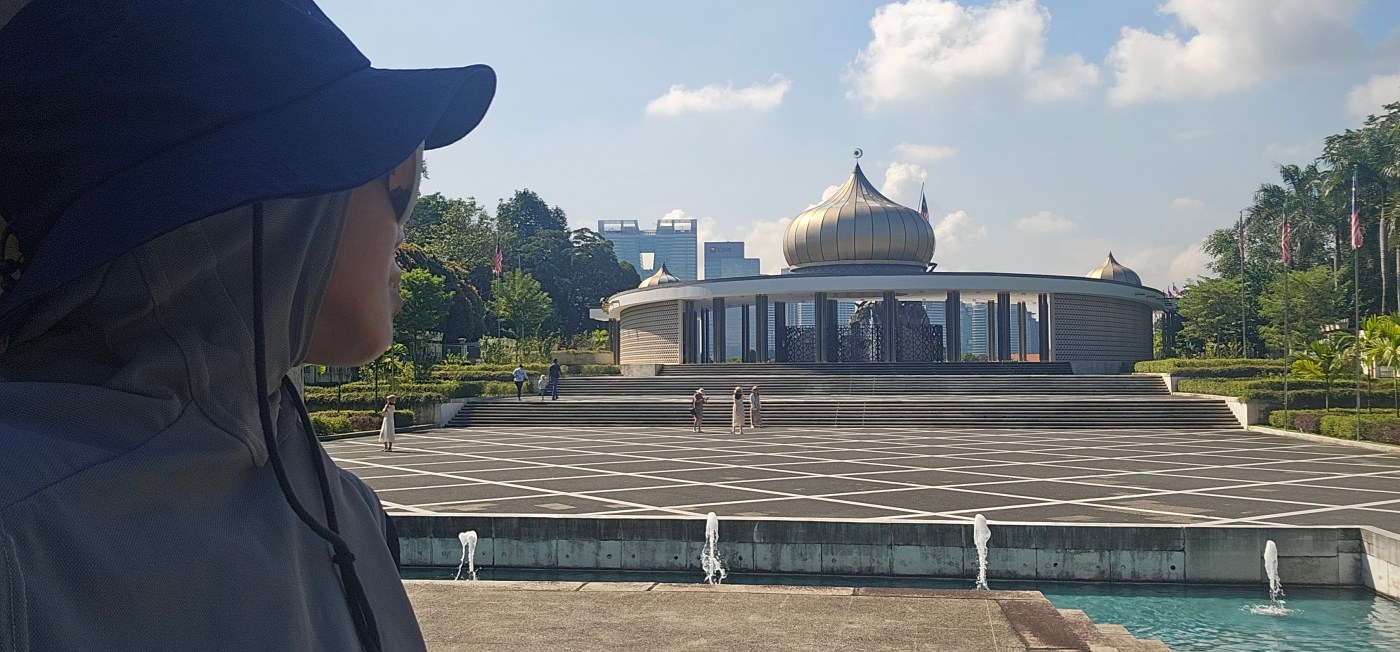
An identity dilemma?
Self-identity has long been an inner conversation which I’ve had with myself since I was young. Who am I, really? Where do I fit in the bigger scheme of things? Why me? A similar concept when we think of thinking. The more I understand of a subject, whether it from a structured learning, conversations, attending seminars, reading and the likes, the more I appreciate how a subject can be approached. This depends on the i)context, ii)audience, iii)purpose and iv)familiarity of those involved in said conversations. The ability to cross-link an understanding to different concepts which is still relatable, is in itself projects the mastery of using our thinking skills in making sense to we speak. Not only that, but to use it to mould and shape conversations, be it simple or complex.
I also understand that despite our familiarity with certain topics and academic areas, the ability to bring a discussion in a tone and approach relevant to the audience is utmost important. Reading the room or having an understanding of the audience serves the benefit of meeting the audience where they are at, including in navigating difficult or sensitive topics. Maintaining adab (ethics) while at it.
Yesterday, a friend’s daughter and I had the priviledge of attending a forum entitled ‘The Malaysian Dilemma‘- where speakers and prominent panellists were invitedto deliberate a few key questions relating to what makes us, us. What makes us Malaysian, the nations of intent, the historical lead up to Rukun Negara, decolonising Malaysia, the importance of language(s) in nation building and the narrative of a Malaysian myth, another topic which was highly debated– which was met with different mind opening responses. In this context, the concept of self and the questions which forms the construct of the self, building a self-identity, self-value and eventually a self-esteem, are discussed but at a plural and nation level. How we view ourselves, and not merely ‘what’ we identify ourselves by– is the same question of the self, just amplified to fit into a national narrative, in this case, being Malaysians.
Sources of perceiving reality
With faith also serving as a source of worldview at the individual level, its very much understandable that achieving a sustained concept of who we are, first, as our ownselves is important. It is something not achieved quite immediately, and may take even decades.
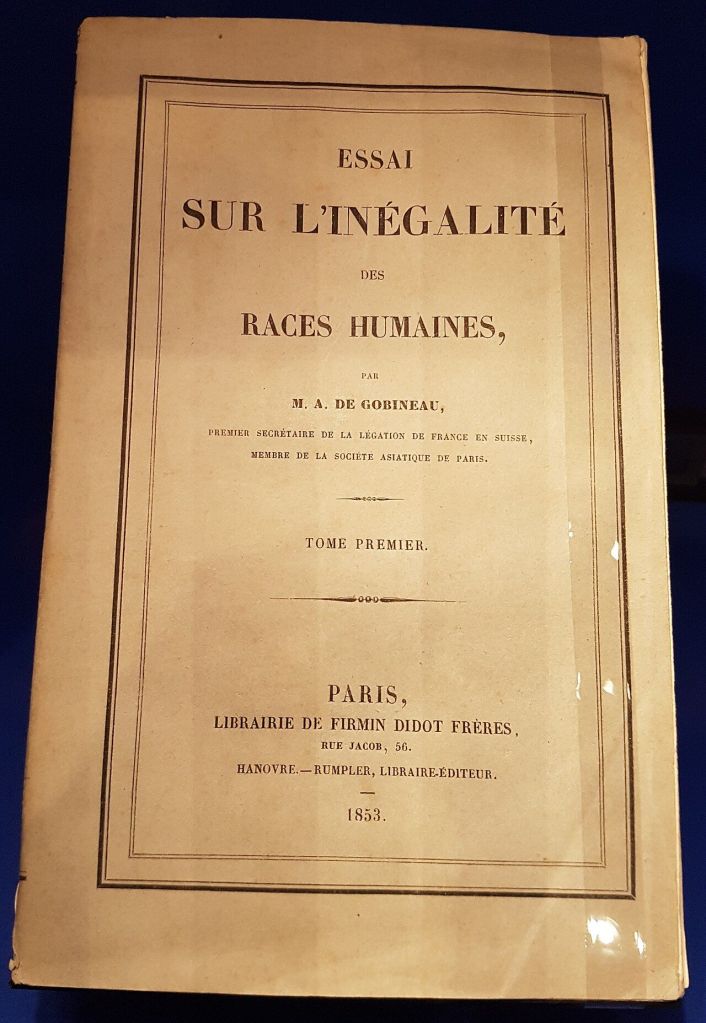
Previous civilisations have different approaches to the very constructs of the self amd self-identity. Depending on who happens to be the leader at the time, these politically motivated approaches may as well be the foundation to the self-identity. Take Arthur de Gobineu for example, who’s book written in 1853 (Essai sur l’inégalité des races humaines- An Essay on the Inequality of the Human Race) which inspired a young Adolf Hitler with his theory on how the Aryan, a superior race, must have its purity kept, and do not mix-breed as it will dilute its pure blood.
Upon this pseudo belief, Hitler went on to orchestrate the Holocaust and World War II in Europe. How many million lives did this theory cause? Its estimated 60-85 million deaths within the span of 7 years beginning from the year Germany invaded Poland.
Tall blonde haired and the Tabriz tally
The tall, blonde haired and blue-eyed pseudo schema of a pure breed aside, Sultan Ismail I who faced a turbulent upbringing, just at 14 seeked vengence, became a founder is the Safavid Dynasty and the Twelver Shia Islam. The aftermath was unimaginable. Sunni Muslims who refused to convert to Shia faced death sentence in massacres which took part in different cities including in Tabriz in 1501, up to 1624 in Iraq. The tally was in between ten of thousand up to a million.
1501.. that is basically a good 300 years before Arthur de Gobineu wrote his book. Were there not academic disourses back then or advisors of these leaders to have put a halt to these extreme ideas before all hell broke loose? I wouldn’t know.
The Sunni scholars works were destroyed and burned, while some survived due to earlier translation and dispersion. The ‘exodus’ to the east by some of these Sunni scholars; jurist, theologians and philosophers; their move to Central Asia and the continent of India benefitted not only those who fled the Safavid Empire, but also those born centuries later whom were inspired by the works of these scholars who survived the persecution. Fadl-Allah Ibn Ruzbihan al-Khunji (d. 1521) for example, authored Suluk al Muluk (conducts of kings) in Bukhara, the city he retreated to.
Fair to say, preserved works of Sunni Muslim scholars from pre-Safavid dynasty, Iran, was given an extended intellectual lifeline and eventually found its way to the royal courts of the Sultans in the the Muslim kingdoms in Aceh, Palembang, Jawa and Johor between the 16th and 18th century though it was in the 1600s when serious royal patronages by the South East Asian courts took place. Key works resulting from this include Bukhari al-Jauhari’s Taj al Salatin in Aceh (1603) and Bustan al-Salatin by Sheikh Nur al-Din al-Raniri (1638).

Looking hindsight, much intellectual development were achieved across the decades after bold, unbased and biased moves by the leaders discussed earlier. This despite the unfortunate massacres and lives lost in 15th century Persia and 20th century Germany. Devastating enough, the genocidal and blatant continuous land seizure by the colonialists in Palestine continues until today. Have we not learned from the past…?
The state of the ‘aql (mind)
The danger of all-or nothing thinking, and decisions which has no grounding or base, scientific and academic inquiries, is of grave consequence. All in the name of appeasing leaders with lethal ideas and concepts, or who tries to force mould the very concept of the self to its people, right down to the individual level is just irresponsible and self-serving.
To round the circle, extremism, being in constant polarised state , not having enough historical perspective and taking something as ‘bulat-bulat‘, are not signs of an enquiring civisiled humanity. Whether we are talking in the political, or national sense, we need to know why we are the way we are, but without dismissing the co-existing diverse forms of worldviews.
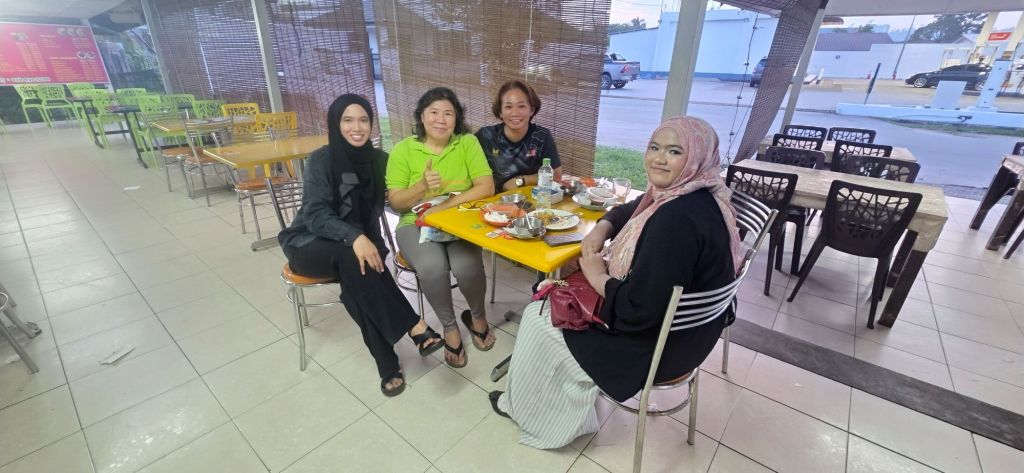
My experience attending the forum yesterday, organised by Myphilsoc, membuka lembaran baru to my understanding of why we are the way we are. I have established through my understanding of the Islamic worldview, that we need to transcend mediocre rhetorics. Discussing not just for its own sake. Instead of debating what unites us or what makes us Malaysian (highly subjective narrative the way I see it), we can focus on common values which we have inherited from our predecessors, which paths do we take and most importantly, how will we achieve it as a civilisation which continues to reclaim and build its identity. And all this while still being to maintain a worldview based self-identity.
Of biawak gelabah vs Hamsters on the treadmill
Should we have a roles and responsbilities matrix, we may argue bulk of this should be lifted by nation leaders. Thing is, nation leaders keep changing that no one continues the building. Just like the a hamster on the hamster treadmill. They appear to be running. But to where?

We need not reinvent the wheel. We need to build as we go, and ensure, the mistakes of the past do not repeat itself. Hence its crucial that access to our shared and overlapping history has to be democratised, and not confined by the propaganda flavour of the term. If we are indeed going down that rabbit hole, then think of those nations completely shut off from the world, being afraid of its own shadow, thanks to a very precise and meticulous propaganda machinery.
Thinking, narratives and mind sets
This also comes by informed policy making (I am no policy expert) which trascends the volatile nature of leadership of this country, continuous analysis on our progress, and tolerant to ideas of how progressive improvement can be made. The binary (all-or-nothing) approach and ‘Just do it’ mentality has no place in nation building.

Matters of a nation building and its survival should not be taken only colloquially but has to be a subject of a serious debate taking into account actually, colloquial narratives. While we have these forums in grand banquet halls, do we really resonate the colloquial narratives of the people? Are our leaders capable of really ringing into the voices of the rakyat? Or our leaders more focused in popularist ideas for the quicker wins? Do leaders truly participate in serious debates, or just come and leave after officiating these truly great thought through forums? Are our leaders truly empathy?
Adab before ilmu. You do not leave before the intellectual program ends. You miss out. If you did, at least get the notes!
Just me, my self and my self-identity
So this is me reaching out, through action, and not mere enthusiasm which fades into the thick cushioned wall of a banquet hall.
Self-identity goes a long way, and it is top-bottom as much it is bottom-up. Dr Munira al-Attas emphasised on top-bottom approach: the DEB (Dasar Ekonomi Baru) and education system playing significant role (by right!) in uniting Malaysia and developing the Malaysian identity. Shahril Hamdan mentioned on what is the Malaysian myth that can serve as a uniting factor for Malaysians.
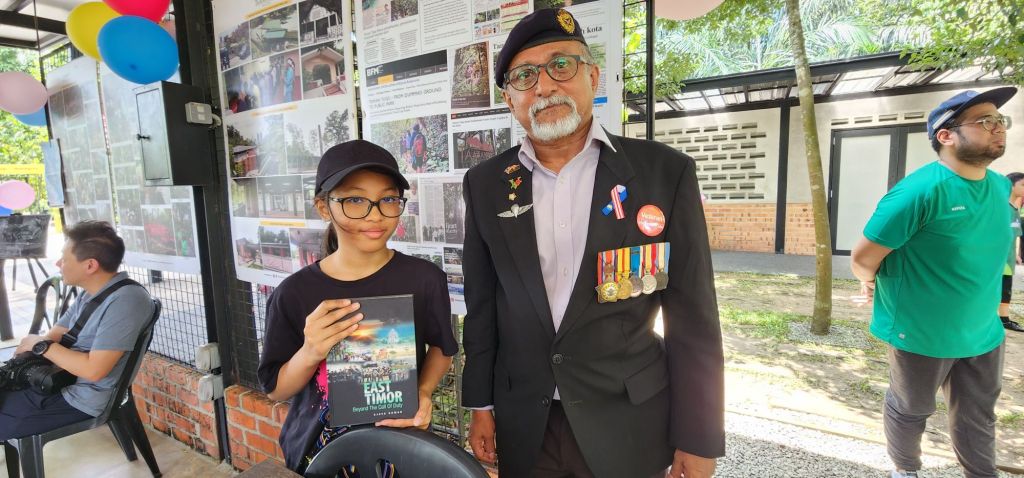
I was in the opine that we already have many traditional stories, folklores and cerita rakyat which we learned in school, where lessons and ‘hikmah’ are derived from. Lets re-tell those stories. Similarly, the stories and lived experiences by those who have sacrificed their lives or put their lives at risk for this nation. The ‘Taman Tugu Human Library’ (TTHL) is one impressive effort to bring together people into dialogues to break stereotypes and prejudices.
I was fortunate to attend a TTHL titled the ‘Malaysian Military History’ where veterans came shared their experiences, including those who have authored their own books. Do you think we can meet half way ie preserving cerita rakyat, while uplifting inspirational stories which us makes love our country?
As I mentioned to my daughter’s friend, who I proudly invited along for thePhilsoc forum yesterday, we can co-exist while maintaining our self-identity, and to what the nation identity with. Remaining inclusive while maintaining certain exclusivities be it faith or culture, while remaining in unison for the future of the country. Why are we waiting to be handed what it means to be Malaysian, when the boat has long left the pier. We do already have our faith and culture identities etched within us, handed down. We have lived within our Malaysian cultural nuances which we we embrace as much as we pride ourselves with. Pejuang-pejuang terdahulu died defending our land, and our modern day leaders post Merdeka took compromises and bold moves to ensure our peace is achieved.
Prophet Muhammad (Peace Be Upon Him) is also one of the great leaders whose leadership is marked more in his actions and decisions more than anything else. He showed kindness and compassion, while respecting the credibility of those expert in their various fields. He was both of accepting and tolerant to people of various faith when establishing Constitution of Madinah (Mithaq al Madinah), a single binding social contract which guaranteed the safety of non-Muslims, freedom of belief and worship and inclusion in one civic society.
My duaa’ (prayers) is for Malaysia to remain a a blessed country, with leaders who are capable in maintaining peace and justice, while ensuring we continue to shape future leaders of superior qualities. Education is indeed an important tool to nurture future fair minded and critical thinkers, and we all do need to step up in our own capacity to ensure this can be achieved, InsyaAllah.
Juliana Ali
15 November 2026
Kuala Lumpur.


Leave a Reply