
Taking a break, is perhaps one of the most ambiguous line you frequently come across or have imparted. School breaks, career break, or even a ‘social media’ break. How this is never a true positivist ‘break’ is due to lack of quantifiable metrics and categories which makes ‘a break’ a real break. The threshold for ‘how long a school term should be’, ‘how much is ‘lectured’ in a single credit hour’s faculty’s course, the ‘concentration of a prescriptive medicine’, and ‘the data load and volume of internet and socials’ consumed’ — all while can be measured, has loose bearings to what truly is considered a ‘threshold’.
Think of the oxygen saturation in your oxygen dense arteries.. those will have a real and true threshold, thanks the science, their research and application breakthrough. Similarly the ‘drop’ in oxygen in your blood vessels is expected between to the range of 65% to 75% range upon returning to the lungs and hearts. A drop or raise beyond this ‘healthy’ range signifies in something else and will raise the attention of the health practitioners attending to the patient/person.
Need to take a break, but from what?
i)Extreme anger
From p’ujul to gurindam
I was just thinking this ‘phenomenon’ through. So bear with me. Certain philosophies and faith teach its followers how one should take a step back, or ‘take a break’ when in anger. The ancient Mayan, depending on their societal hierarchy ‘takes a break’ or let extreme and intense anger (p’ujul) out through either sacred ritual or communal ritual. This include bloodletting for the elites, as well as dance and healing — considered as a safe space to channel those emotions away. Interestingly enough, the word ’emotion’ do not exist in the Mayan culture. The Mayans will talk more about the mood than the emotional.
In the Islamic tradition, anger is managed more proactively within a person before it escalates. This include to stop speaking if one sense he or she is about to get raged, and sitting if the person is standing. He or she can also walk away, before further damage is done, which typically is related to the inability to control one’s anger, and what comes out verbally. Excessive anger is considered a disease of the heart, and many Islamic scholars have discussed anger, and other human emotions extensively, and how it should be channeled or managed.
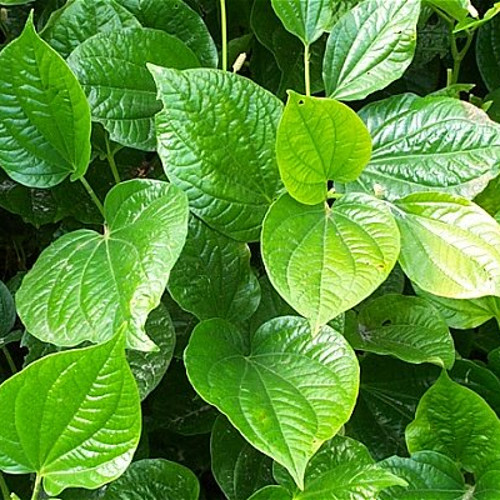
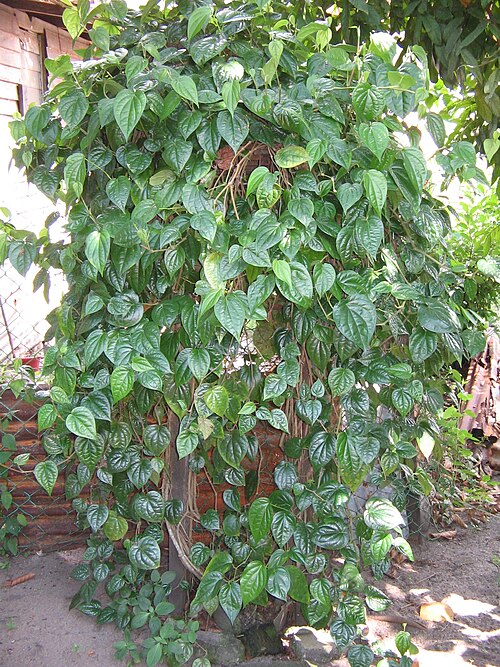
In the Malay archipelago, the Malay concept of ‘budi pekerti’; (refined character and ethics) is much intertwined with the Islamic recommendations on managing anger. One example I can think of is the phrase ‘kerana mulut, badan binasa’, where one is aspect to really think of the spoken words and the danger or damage which can be done to our carelessness when speaking. Rather than ‘snapping out of it (anger)’, there are elements of the Malay cultural indirectness through silent treatment or merajuk, highly subtle sarcasm, metaphor or poem (sindir-menyindir) and the compliant smile (jaga hati). ‘Bagai kadok naik junjung’ is probably one Malaysians are hearing a lot now, which expresses anger and disagreement of arrogance from fortune, but subtle.
The legendary 19th century poet, historian and scholar Raja Ali Haji addressed how one should manage their heart and anger. While poem (covering both sajak and pantun) is more poetic, gurindam is more instructional. In the pinnacle of this art form ‘Gurindam 12’, Raja Ali Haji in the section 5 (of 12) of the gurindam wrote:
Jika hendak mengenal orang berbangsa,
lihat kepada budi dan bahasa.
Apabila terpelihara lidah,
niscaya dapat daripadanya faedah.
Hati itu kerajaan di dalam tubuh,
jikalau zalim segala anggota pun rubuh.
The English translation of the above gurindam:
If you wish to recognize a person of noble birth,
look closely at their character and their speech.
When the tongue is well-guarded and restrained,
surely from it, great benefits will be gained.
The heart is the ruling kingdom within the body,
if it becomes tyrannical, the entire physical frame crumbles.
ii) Inundation and overload
This is a social psychospiritual crisis faced by both urban and rural dwellers. Modern societies, regardless of your geographical location have created, managed, benefitted and eventually succumbed to this being of constant hustle, regardless of its intention, purpose and intended outcome, if any to say the least. Like the above discussion, of extreme anger, initially unseen but which can quickly escalate, the same thing can be applied to being inundated. Quite layered and complex, one seem to be hesitant where to draw the line between the various aspects of life. The term used and thrown around a lot ie ‘work life balance’, especially by corporate giants as a pull factor and employee value proposition. In my humble opinion this is really about drawing boundaries. As those boundaries are not the gates you lock out off after your working hour, but rather put up around you to manage you cognitive, emotional and physical attention to.
Now, I hope you have that cup of tea or coffee with you, as the real meat of this post is here. I have thought this through, so bear with me. Our conceptualisation of knowledge, whether at the awareness, academic or applied level, truly begins with the pedagogy of the said knowledge itself. Is a word, or a term, the place where pedagogy should be applied ? For the lay person, yes! For the academician? Yes! Does it go any deeper than that? I guess?!
Between triggers and response
My understanding of inundation or being overload in life is threefold. It is a scientific, psychological and spiritual one, depending on the load itself, the type of load, and the mechanism supporting that load. While stress in our mind and chest can’t be ‘weighed’, the other aspects of our lives or where this load offsets or appear as symptoms, can be seen. Our mind and body responds to any triggers or stressors, in ways we have accustomed ourselves too. As we progress through our lives, how we respond to the load, type of load and mechanism supporting and dealing with that load, shifts. How we deal with things, tend to change. What bothered you very much before, seems to have little to no effect to you now as you enrich yourself with knowledge and harsh wisdom from experiences. We perhaps have more knowledge now than before, and appreciation on other aspects, hence the sensitivity and alertness to certain things are heightened too. Hence, in dealing with any triggers, be it social, economy, or even self-triggered, is needing of a holistic approach befitting on the the load or type of load (of those triggers). This includes if those triggers are biological and innate in nature in the case of hyperthyroidism, where high stress level is a risk factor and major trigger to altered immune system and body’s stress response.
As a student of Psychology, there are psychological aspects which intrigued me ie abnormal psychological conditions, personality types, the evolution of the psychological field from the Western perspective, and how Islam seems to encompass concepts of psychological aspects so beautifully. Regardless of our academic background and professions are, is really, what do we do with it. What do we do with the knowledge to change, or make a change?
Same thing when a person is dealing with something or someone he or she can’t comprehend, the mechanism to this is really to take a step back to see what is it (identify), how good or bad it is (assess) and what he or she will do about it. One can’t derive the end game or action plan, without having a familiarity to the first two.
Just hold on to this, while I share another analogy.
Boundaries, time and space
As a once-upon-a time triathlete who has taken her physical and psychological threshold to her limit, I do not look back and fret. Those were the days where I did have the means and capabilities enough to be in the time and space where I was focused and ultra discipline with my time and training, crossing one finish line after another, occasionally hopping on podiums and news articles. I was content, and self-accomplishment was enough. That is before I ask myself, ”Now what?” I am not one who is good with a repetitive accomplishments ie multiples of this and that. Life indeed is short, hence I am doing myself a favour by ensuring the time and space which I have, is utilised for a maximum impact to my commitment at that said time and space. Just like a code to safe full of valuables, its unique.
The sporty me phase have long passed (I still participate in sports by the way) and I am able to put that mind set to other areas of my life, where the focus, discipline and accomplishment are moulded to fit what’s most important to me at the present moment. For all of us, this may be looking at our own selves as head of families, a father or a mother, or as professional and leader in our careers, or as a retiree for that matter. Those are some of the boundaries which I have drawn up in my mind as a guide, as to ensure my perspective are framed as a mechanism to manage the load and threshold — which I was mentioning about earlier. Those not being able to see boundaries, time and space, in and within the persons they are close to, they themselves need a little reminder. This reminder is called: Adab, a dimensional and deep concept of putting something where it is supposed to be.
I happened to be sitting next to a Miss Sally from the United States earlier this morning, and our conversation brought us to an agreement. There is a time and place to do things in our lives. We can’t be doing everything, every time and everywhere, hence, this is a good place for me to adjourn our discussion.
Will be continued in the next post, InsyaAllah (with Allah’s will)


Leave a Reply